How E-Commerce Stores Use AI to Recover Abandoned Carts and Follow Up After Purchase
Losing 7 out of 10 shoppers before checkout? Here's how automated AI sequences bring them back.
 · 9 min read

Estimated reading time: 7 minutes
Key Takeaways

- About 70% of online shoppers abandon their cart before completing a purchase — automated recovery sequences address this directly.
- Abandoned-cart email flows convert between 1.72% and 3.33% of recipients, which adds up fast at volume.
- AI enhances existing email and SMS automation by improving copy, timing, product recommendations, and conversation handling — it does not replace the whole system.
- Post-purchase follow-up is just as important as cart recovery: it drives repeat orders, reviews, and long-term customer value.
- Most small and midsize stores should start with a platform like Klaviyo or Omnisend before adding voice or video tools.
Table of Contents

- Why Abandoned Carts Cost You More Than You Think
- How AI Helps Recover Abandoned Carts
- Post-Purchase Follow-Up: The Sequence Most Stores Skip
- Tools for AI Abandoned Cart Recovery and Follow-Up
- Common Mistakes to Avoid
Why Abandoned Carts Cost You More Than You Think

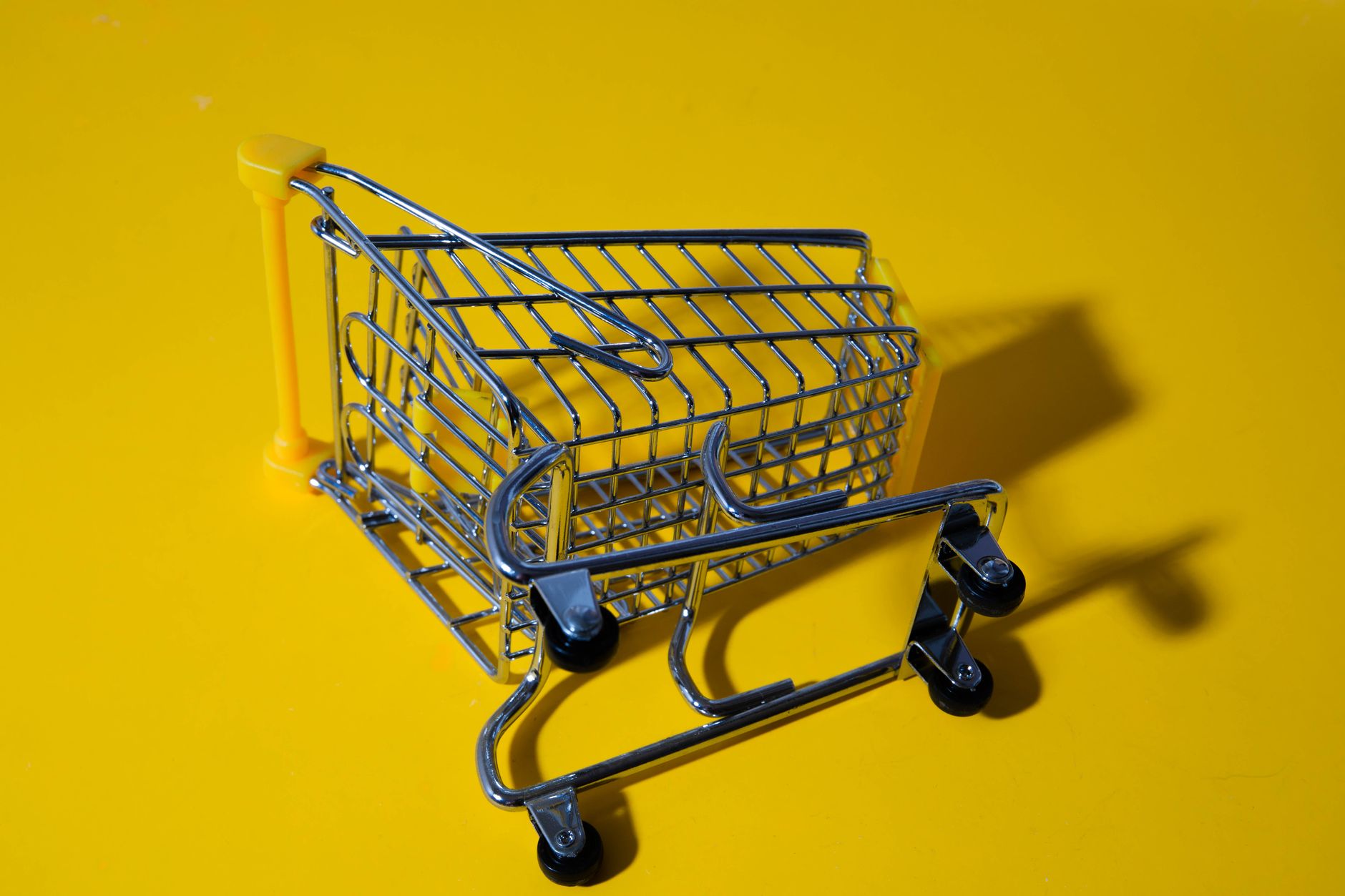
If you run an online store, cart abandonment is your single biggest silent leak. According to the Baymard Institute's 2025 meta-analysis of 50 studies, the average cart abandonment rate across e-commerce is 70.22%. That means roughly seven out of every ten people who add something to their cart leave without paying.
Think about what that represents in your context. You paid for the traffic — through ads, SEO, or social content. You earned the click. You got the shopper to your product page. They liked what they saw enough to add it to their cart. And then they left. In most cases, not because they changed their mind about the product, but because of friction: unexpected shipping costs, a clunky checkout, a payment option they didn't see, or simply a distraction.
The good news is that this is recoverable — literally. A portion of those shoppers can be brought back with the right follow-up. That's what automated recovery sequences are built to do. And AI is now making those sequences smarter, faster, and more personalised than they used to be.
How AI Helps Recover Abandoned Carts
Let's be precise about what "AI" actually means here, because there's a lot of noise around it. For most small and midsize stores, AI in cart recovery does not mean a fully autonomous robot chasing down shoppers. It means automation flows — email, SMS, sometimes voice or video — that are enhanced by AI to improve copy, timing, product recommendations, and personalisation.
The practical setup looks like this:
Step 1 — Capture the contact before the cart is abandoned
This sounds obvious, but it is the most common gap. If a shopper never entered their email address, you cannot follow up by email. Many stores solve this with a pop-up that captures the email early in the session, or by requiring an email at the first step of checkout. Without a usable contact and the right consent (depending on your jurisdiction and channel), no recovery sequence can run.
Step 2 — Trigger the recovery sequence automatically
When a cart is abandoned, your platform fires the first message — usually an email — within one to a few hours. This is not AI yet; it is a deterministic trigger. What AI adds is the ability to choose the best send time for that specific contact based on their past behaviour, generate personalised subject lines, and surface the right product image or variant in the message body.
Step 3 — Run a short multi-message sequence
A single message is rarely enough. A standard recovery flow runs two or three messages over 24 to 72 hours: a reminder, a follow-up that addresses a likely objection (shipping cost, return policy), and optionally a final nudge. Platforms like Klaviyo and Omnisend handle this natively. Conversion rates for these flows typically sit between 1.72% and 3.33% per recipient, according to 2025 data from those platforms — modest per contact, but meaningful at scale when you consider what a recovered order is worth to your margin.
Step 4 — Add conversational or video recovery for high-value carts
For stores with higher average order values, more advanced tools are now available. CartSaver, for example, generates personalised AI video emails for abandoned carts and integrates directly with Shopify. Callsy goes further by placing automated AI phone calls and SMS messages to shoppers who abandoned checkout. These formats are emerging rather than universal, but they are commercially available and can make sense when the recovered revenue justifies the extra cost.
Post-Purchase Follow-Up: The Sequence Most Stores Skip
Cart recovery gets most of the attention, but post-purchase follow-up is where long-term revenue actually lives. Acquiring a new customer costs significantly more than retaining an existing one — and a customer who has already bought from you is far easier to convert again than a cold visitor.
A solid post-purchase sequence typically covers several moments:
- Order confirmation: Immediate, transactional, but also an opportunity to reinforce trust and set expectations.
- Shipping update: Keeps the customer informed and reduces inbound support questions.
- Delivery confirmation + review request: Sent a day or two after delivery, this is the highest-probability moment to collect a review while the experience is fresh.
- Product education: For consumables, cosmetics, or anything with a learning curve, a short email showing how to get the most from the product reduces returns and builds satisfaction.
- Replenishment or cross-sell: Timed to when the product is likely running out or when a complementary product is relevant, this is where AI-driven recommendations genuinely shine — predicting what the customer is likely to need next based on purchase history and segment behaviour.
- Win-back: If the customer has gone quiet for 60 or 90 days, a targeted message acknowledging their absence can re-engage a portion of them before they slip away permanently.
Platforms like Klaviyo and Omnisend handle all of these sequences within the same system you use for cart recovery, which makes the operational case for setting them up at the same time straightforward.
Tools for AI Abandoned Cart Recovery and Follow-Up
Here is a practical overview of the main options, based on verified public pricing and capabilities:
Klaviyo
The most widely adopted platform among Shopify and e-commerce stores at scale. Klaviyo handles email and SMS automation, abandoned-cart flows, segmentation, predictive analytics, and full post-purchase sequences. It has a free tier for up to 250 profiles, with pricing scaling by contact count and usage. AI features include send-time optimisation, predictive customer lifetime value, and product recommendation blocks.
Omnisend
A strong alternative with a focus on e-commerce, covering email, SMS, and push notifications. Plans start at approximately $16 per month. Omnisend covers the full spectrum from cart recovery to post-purchase and win-back sequences, with SMS charged per message. It is a practical entry point for stores that want multi-channel automation without the complexity of enterprise tools.
CartSaver
A more specialised tool that generates personalised AI video emails for abandoned carts, with native Shopify integration. The free tier covers up to 10 carts per month. The main paid plan runs approximately $29 per month for unlimited carts. This works best for stores where a personalised, high-attention format can justify the additional setup.
Callsy
An AI voice and SMS recovery tool that places automated calls to shoppers who abandoned checkout. Plans range from a free trial to approximately $29 per month for up to 50 AI calls and $99 per month for up to 200 calls, with higher-volume options available. Voice recovery is a niche format — it suits certain product categories and customer expectations better than others — but it is commercially available and worth knowing about for higher average order value stores.
Common Mistakes to Avoid
Before you go live with any of these sequences, here are the mistakes that consistently undermine results:
Defaulting to discounts as the first recovery tactic
Sending a coupon in the first recovery email trains your customers to abandon carts on purpose to wait for the discount. Start with a straightforward reminder and address the most likely friction points — shipping costs, return policy, payment options — before reaching for a discount. If you do use one, save it for the second or third message.
Measuring opens instead of profit
Open rates feel good but they do not pay your bills. The metrics that matter for cart recovery are incremental recovered revenue, contribution margin on recovered orders, unsubscribe rate, spam complaint rate, and repeat purchase rate after the sequence. AI tools that promise strong open rates are not necessarily delivering strong business outcomes.
Assuming every abandoned cart is contactable
If a shopper browsed anonymously and never entered their email or phone number, you cannot reach them. Marketing messages also require consent under regulations that vary by country and channel. Your recovery rate will always be a fraction of total abandonment — and that is normal. Focus on optimising the contactable segment rather than chasing the uncaptured majority.
Treating AI as a replacement for a solid checkout experience
No recovery sequence compensates for a broken checkout. If your shipping costs only appear at the final step, if your payment options are limited, or if your mobile checkout is slow, fix those first. Recovery automation works best when it handles genuinely indecisive customers, not frustrated ones who hit a wall.
Conclusion
Cart abandonment is not a problem you can eliminate, but it is a problem you can manage systematically. At a 70% abandonment rate, even recovering a small percentage of those lost sessions translates into meaningful revenue — especially when post-purchase sequences are running in parallel to extend customer lifetime value.
The practical path for most small and midsize stores is to start with a platform like Klaviyo or Omnisend, build out the core abandoned-cart flow and the post-purchase sequence, and measure actual recovered revenue before exploring more advanced tools like AI voice or personalised video. The technology is accessible. The margin gains are real. The work is in setting it up correctly and not mistaking activity for results.
Want to go further? Join the Skool group (200+ entrepreneurs) and the AI builders' Discord → Join the community
Running a business and want to automate your content or processes with AI? → Book a call
FAQ
What is the average cart abandonment rate for e-commerce stores?
According to the Baymard Institute's 2025 meta-analysis of 50 studies, the average cart abandonment rate across e-commerce is 70.22%. That means roughly seven out of ten shoppers who add a product to their cart leave without completing the purchase.
How much revenue can abandoned cart emails actually recover?
Abandoned-cart email flows convert between 1.72% and 3.33% of recipients, based on 2025 data from Omnisend and Klaviyo. Those numbers may sound small, but at volume — and when multiplied by your average order value — the recovered revenue adds up quickly.
What tools do small e-commerce stores use for abandoned cart recovery?
The most common tools are Klaviyo and Omnisend for email and SMS automation. More specialised options include CartSaver for AI-generated personalised video emails and Callsy for automated AI phone calls and SMS reminders. Most small stores start with Klaviyo or Omnisend, which cover both cart recovery and post-purchase sequences in one platform.
Should I offer a discount in my abandoned cart emails?
Not automatically. Using a discount as your default tactic can train customers to abandon carts deliberately to wait for an offer, and it reduces your margin on recovered orders. Start by addressing the real friction — unexpected shipping costs, limited payment options, unclear return policies — and reserve discounts for later messages in the sequence if needed.
What is a post-purchase email sequence and why does it matter?
A post-purchase sequence is a series of automated messages sent to customers after they complete an order. It typically covers order confirmation, shipping updates, a review request after delivery, product education, and cross-sell or replenishment offers. It matters because retaining an existing customer costs far less than acquiring a new one, and repeat buyers generate a disproportionate share of long-term revenue.
How does AI actually improve abandoned cart recovery?
AI does not replace your email or SMS system — it improves it. Common uses include optimising send times based on each contact's behaviour, generating personalised subject lines and message variants, surfacing relevant product recommendations, and handling conversational follow-up. The underlying flow is still triggered by deterministic rules; AI makes the messages more relevant and the timing more precise.
Can I use AI phone calls to recover abandoned carts?
Yes, tools like Callsy now offer automated AI voice calls linked to abandoned checkout events. Plans start at approximately $29 per month for up to 50 AI calls. This format is more niche than email or SMS and works best for stores with higher average order values where the recovered revenue justifies the cost and where customers are likely to respond positively to a phone call.
On voit si l'IA peut faire cartonner votre business ?
15 minutes, cash. Pas de script, pas de jargon. Au pire, on vous dit que ce serait un flop — et vous aurez gagné du temps.